

Field Notes: The Dinner That Taught Me Something
Some rooms you design. Some design you back.

There’s a specific category of event canapé that exists solely to remind you that someone, somewhere, made a decision and called it hospitality. This one was a blini situation. Room temperature. The salmon had been through something. I ate it standing up in a café area by the main hall of our biggest conference of the year, surrounded by people I needed to impress and noise I couldn’t escape, and somewhere between the blini and the sparkling water that had given up its spark, a thought arrived with unusual clarity:
The board dinner is in a week. And the board members do not need another dark room.
Let me explain the board. These were not people who were easily impressed by the performance of importance. They’d been to every restaurant worth going to, in every city worth going to it in. They had considered views on wine in the way that people develop considered views on wine when price stops being a consideration. They represented serious capital and they carried themselves accordingly — which is to say, they were perpetually, professionally unimpressed. The sharktank energy was not incidental to these meetings. It was the weather. You dressed for it. You prepared for it. You showed up anyway.
The usual format for a dinner of this kind: a private dining room, often subterranean, in a five-star setting. Walnut paneling. Leather. A sommelier educated at one of the best universities in the world seated with us as his monthly retainer with the company dictated, brandishing bottles older than me that I still can’t quite believe exist. The menu explained ad nauseam by someone who takes the menu very seriously. All of it impeccable. All of it entirely invisible to people who have sat in that exact room, in that exact configuration, in eight cities on four continents.
They were also, I realized standing in that corridor, travel weary. These meetings came in the midst of long weeks that had come at the end of long months. The dynamic was real, but underneath it was something more human: people who were tired of performing for each other and had no obvious permission to stop.
My colleague and I looked at each other. We pivoted.
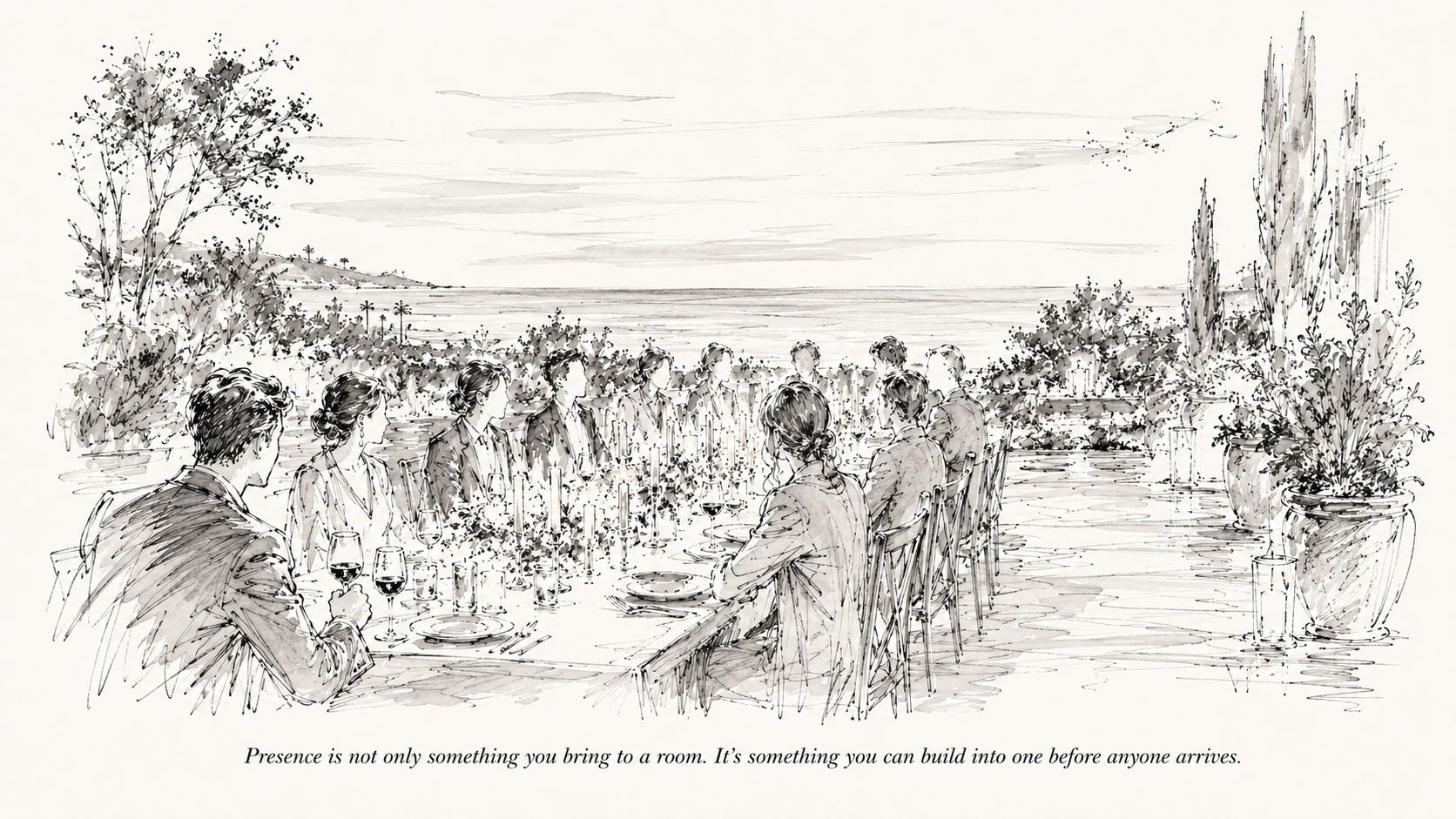
What we put together instead: dinner in the CEO’s garden, Pacific Ocean roaring in the background, under an open sky. One of my best friends — critically acclaimed, a celebrity chef in his country, glowing NYT review to his name — flown in from abroad along with his Sous to cook. Caviar from Eric Ripert’s personal collection, overnighted. Oysters just arrived from New Zealand, picked up the day of from a seafood importer in El Segundo. All of it assembled in seventy-two hours, while at the helm of MarCom for this company and simultaneously running our largest, nearly 7-figure conference appearance of the year.
The dinner was something else.
The conversation moved differently than it did in the walnut-paneled rooms. Storytelling surfaced. Laughter arrived and stayed. The people who had been performing authority all week were, under the stars, just people at a table who gradually decided they were pleased to be there. The Pacific did not disappoint.
After the fact, we went back to sharktank dynamics. The business required it and everyone knew the score. But something had shifted — a degree of rapport that made the harder conversations slightly less hard. A foundation that hadn’t existed the week before.
Months later, I was catching up with one of the board members. European. The kind of man who has seen, across a long life and considerable means, most of what money can arrange. He brought up the dinner unprompted — not the caviar, not the chef, not the oysters from down under. The night. The garden. The stars over the Pacific and the particular quality of a table where everyone was at ease.
He said he remembered it fondly.
I’ve thought about that more than I expected to. These were people for whom the finest version of almost anything was available on request. Case in point: at a previous iteration of this dinner, one of the board members proudly showed me his wedding photos. The Pope was in them. What wasn’t available on request was the feeling that someone had read the room before they arrived in it — had understood what they actually needed, which turned out to have nothing to do with walnut paneling.
Reading a room includes rooms that haven’t happened yet. Sometimes the most important presence work is done standing in a corridor, eating something terrible, paying attention to what nobody else is thinking about yet.
The walnut paneling never had a chance.
— Mel
The best rooms don’t perform their own expensiveness.