

The Travel Reset Protocol
How to land and become a person again.

It’s 2pm local time. You landed two hours ago. Dinner is in six hours, with people who matter. Your face looks like it lost an argument with a cabin air recycler. Your ankles have opinions. Your inbox has 97 new messages, 13 of which require deep thinking, and the hotel gym closes at 10.
This is what the Travel Reset Protocol was built for.
First, the honest framing: a flight is not passive. Your body reads the entire experience — dehydration, compression, stale recirculated air, disrupted sleep, posture collapse, blood sugar swings, stress hormones from three different security lines — as a low-grade threat. You land technically fine but functionally behind. The goal of the reset is not to pretend the flight didn’t happen. It’s to stop the cost from compounding.
Dehydration becomes bloat. Bloat becomes sluggishness. Sluggishness becomes bad decisions. Bad decisions become walking into the room already behind. The reset interrupts the slide.
Travel recovery is presence work. The protocol starts before anyone sees you.
— The Timeline —
Last hour of the flight
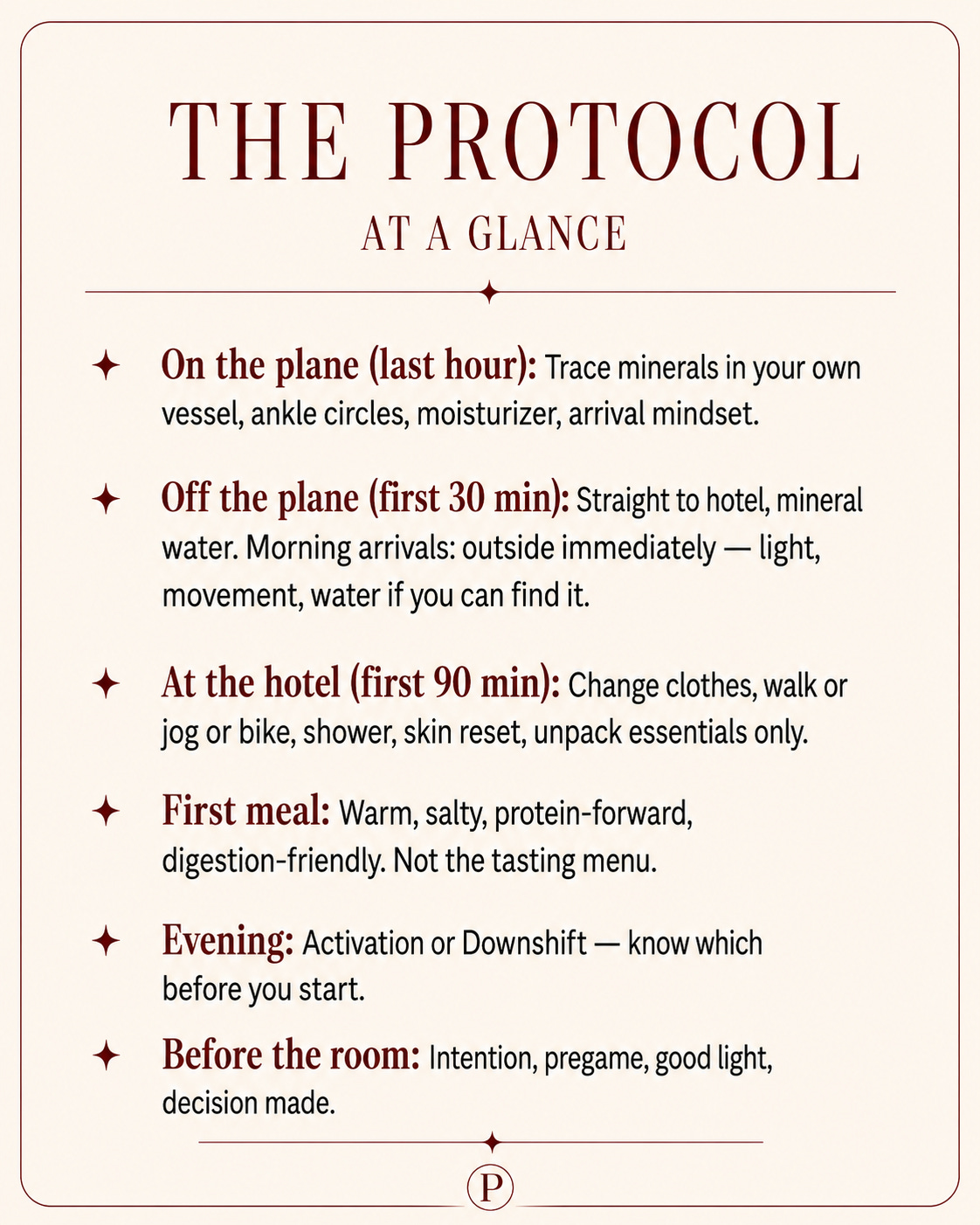
The last hour of the flight decides whether you land as a functioning adult or a crumpled receipt. Don’t spend it watching a second episode of something mediocre. Shift into arrival mode.
Drink water with trace mineral drops if you have them (a half dose of Liquid IV, Nuun, or similar is a reasonable alternative) — hydration without minerals is mostly just a bathroom tour. Do this in your own metal or glass vessel if you travel with one, which you should. Do ankle circles. Roll your shoulders. Decompress your spine. Hit the bathroom. Then: face mist or a swipe of moisturizer, lip balm, a look in the mirror that is diagnostic rather than despairing. Locate which bag you need first. Know what you’re eating when you land. Mentally reduce friction everywhere you can.
You’re not trying to look good on the plane. You’re trying to land ahead.
First 30 minutes off the plane
One priority: get to the hotel. Keep drinking mineral water on the way. Skip airport food unless you’re genuinely depleted — most of it will set you back further than the hunger will.
If you’re landing in the morning, the single most useful thing you can do is get outside within the first hour. Walk, jog, or find a bike — whatever your body has for it — before you do anything else. This is not exercise. This is circadian anchoring: natural light tells your nervous system what time zone it now lives in, and no amount of melatonin works as well as ten minutes of morning sun on your face while you’re moving. If you can get near water and into it, even briefly, do it. Something resets that’s hard to name and impossible to fake.
First 90 minutes at the hotel
Change clothes immediately. Not into pajamas — into a clean, intentional outfit, even a casual one. Travel clothes are for transport. Arrival clothes are for identity. The change is a nervous system intervention with better tailoring.
Then move. Twenty to thirty minutes — a walk if the body is wrecked, a jog or bike if you have more in the tank. Outside if it’s light and safe. The goal is circulation, lymph, digestion, and the particular mental clarity that only comes from physical effort. Not moral superiority through burpees. The first real movement after a flight is a system reboot, not a workout.
Shower after. Keep it warm, not scalding. Then skin: gentle cleanse, hydrating serum or mist, moisturizer or face oil, lip balm. Your skin doesn’t need ambition right now. It needs water and a locked door. Save the actives for when your barrier has had a day to recover. If you’re puffy, a cold splash or a few minutes of facial massage will do more than any serum.
Unpack only what reduces friction: tomorrow’s outfit, toiletries, charger. The rest can wait.
First meal
The body after travel doesn’t need a culinary personality test. It needs warmth, salt, protein, and mercy.
The formula: a light portion of something warm and brothy, a clean protein, a simple starch — rice, potato, noodles — cooked greens, and a fermented accent if that works for you. Miso broth with rice and fish. A clean soup with good bread. Roast chicken, potatoes, something green. This is not the meal where you explore the local tasting menu. That’s tomorrow, when you’ve slept and your gut has forgiven you.
Avoid the instincts that feel virtuous but aren’t: giant raw salads, alcohol-forward dinners, heavy dairy, a parade of rich unfamiliar food. Also avoid the instincts that feel earned but aren’t: ordering everything on the room service menu because it’s been a long day.
On bloat: it’s normal, it’s temporary, and the move is not punishment. The move is motility — walking, warm liquids, ginger or peppermint tea, a simple dinner, an early bedtime when you can manage it.
Evening: choose your track
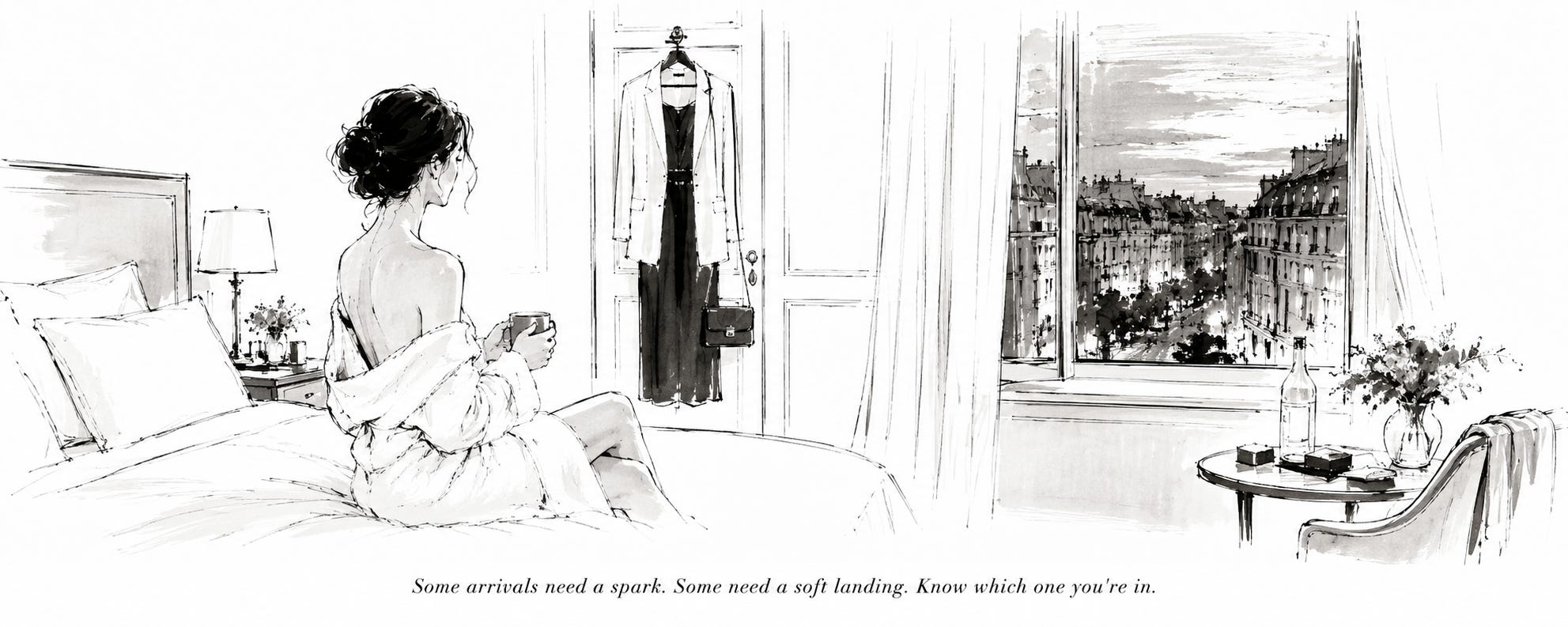
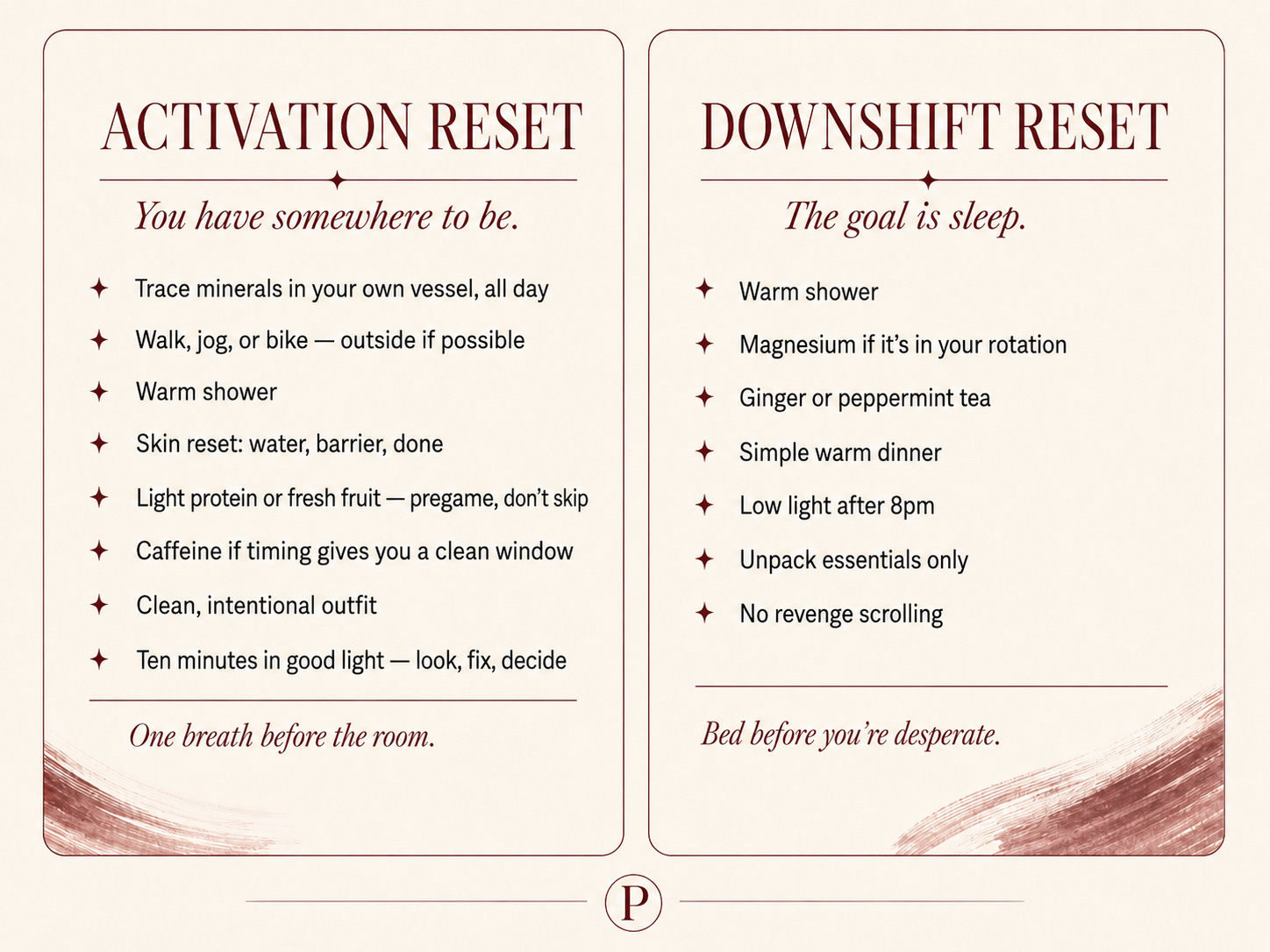
The mistake is treating every landing the same. Some arrivals need a spark. Some need a soft landing. Know which one you’re in before you start getting ready.
Before you walk in
If you’re on the Activation track, there’s one more thing, and it’s the one most people skip: get your head in the room before your body arrives.
Five minutes. Who’s there, what you want from the evening, one thing you’re genuinely curious about. Not prep. Intention. There’s a difference between walking in reactive and walking in with a point of view, and it’s visible from across the room. A short jog or bike ride right before this isn’t redundant — it’s the fastest way to shift from passenger brain to presence. The blood moves, the fog lifts, and suddenly you have opinions again.
Then the pregame: something light, something real. A few bites of clean protein or fresh fruit twenty minutes before you sit down. You want to arrive at the table with an edge, not a deficit. Hunger makes you sloppy. A good pregame makes you sharp and lets you actually enjoy the meal instead of attacking it.
Ten minutes in decent light before you leave. Not harsh bathroom fluorescents — a lamp at face level, a window, anything honest. Look. Fix what needs fixing. Then decide you look good. That last part is a conscious decision, and it changes how you walk in.
The point is not to pretend travel has no cost. It does. The point is to stop letting the cost compound — and to walk into whatever room is waiting having already handled it.
Presence starts before anyone sees you.
— Mel